Thin Client Replacement After AXEL’s Closure: A Structured Transition Strategy
February 19, 2026
When Axel confirmed its permanent closure on September 29, 2025, many IT teams began reassessing their endpoint strategies.
Here is the official closure notice confirming the decision.
For organizations using G10, G15, or older M-series units, this development extends beyond vendor news.
It is about selecting the right thin client replacement strategy, ensuring continuity without unnecessary urgency or overcorrection. (For endpoint architects, IT decision-makers, and procurement leads: the following sections will help you chart a clear, practical transition.)
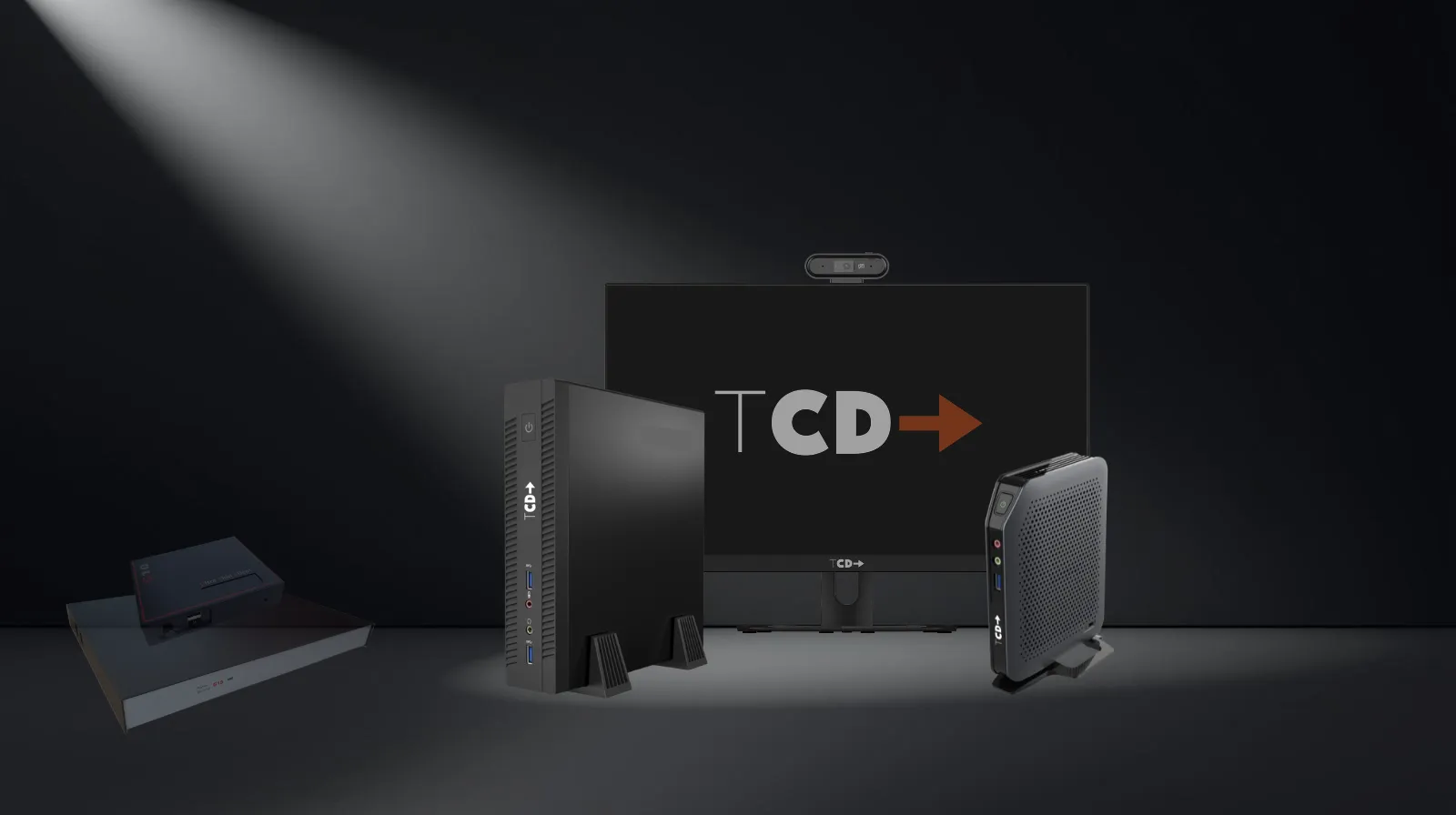
Table of Contents
ToggleWhat Happens When a Thin Client Vendor Closes?
When a thin client vendor closes, immediate operational failure is uncommon.
The primary risks emerge over time:
- Firmware stops evolving
- Protocol stacks lag behind infrastructure updates
- Cloud desktop compatibility becomes constrained
- Security standards move forward without the device
A reactive replacement is not the solution.
A structured modernization approach is required.
Why Organizations Standardized on AXEL Thin Clients
For over three decades, Axel built endpoints based on a tightly controlled firmware philosophy.
Devices like the G10 and G15 were known for:
- Fanless design
- Ultra-low power consumption (~5W average)
- Dual DisplayPort (1920×1200 per display)
- RDP, Citrix ICA, VMware View support
- TN5250 / TN3270 for AS/400 environments
- Minimal firmware architecture
In many deployments, these devices served reliably as AS/400 thin client endpoints or as Citrix thin clients in static RDS environments.
This model provided stability. However, endpoint strategies have evolved.
What Is a Thin Client Replacement Strategy?
A thin client replacement strategy is a structured transition from legacy, firmware-locked terminals to modern endpoints that support evolving protocols, cloud desktops, and current security standards, all while maintaining user workflows.
Today, replacement is not about replicating wattage or physical dimensions.
It focuses on expanding capabilities and ensuring predictable lifecycles.
G10 Replacement: Modernizing Compact Deployments
The G10 became valued for its simplicity and efficiency.
If you are considering a G10 replacement, the most comparable modernization option in TCD’s portfolio is the 1 Series.
The 1 Series maintains:
- Dual display capability
- Fanless configurations
- Compact deployment footprint
- USB redirection support
It adds:
- Modern Intel platform
- Higher RAM ceilings
- OS flexibility instead of firmware lock-in
- Compatibility with Azure Virtual Desktop and Windows 365
For teams seeking an ultra thin client alternative, this option ensures continuity and greater scalability.
G15 Thin Client Alternative for Industrial Environments
The G15 was designed for industrial and serial-intensive use cases, including deployments often referred to as “axel 15” environments.
If your infrastructure relies on RS232 connectivity and a durable fanless design, selecting a structured G15 thin client alternative is essential.
The TCD 2 Series provides that next step.
It preserves:
- Fanless configurations
- Multi-display capability
- Industrial-ready architecture
It enhances:
- Processing performance
- Graphics handling
- Modern chipset lifecycle
- Broader cloud readiness
This transition is not lateral; it represents a lifecycle upgrade.
AS/400 and Legacy Terminal Environments: What Changes?
Search trends now reflect a strong interest in:
- AS/400 thin client
- AXEL thin client alternative
- thin client replacement for TN5250
Modern endpoints must support both legacy and future workloads. A properly designed thin client replacement should support RDP and Citrix environments, maintain compatibility with terminal emulation platforms, allow centralized OS management, and integrate seamlessly with identity based access policies, ensuring continuity today while remaining adaptable to evolving infrastructure demands.
Supporting legacy workloads should not limit hardware capabilities.
Modern Citrix Thin Clients Require Greater Performance Headroom
Current Citrix environments differ significantly from those in 2015.
Modern Citrix thin clients must account for:
- HDX optimization
- Teams redirection
- Multimedia acceleration
- Multi-monitor productivity
Firmware-minimal devices were built for static session hosts.
Hybrid cloud infrastructures require scalable endpoint capabilities.
When an All-In-One Endpoint Strategy Makes Strategic Sense
Some organizations are looking to upgrade the employee experience at the desk: faster setup, fewer distractions, and a clean, modern workspace that helps boost focus and well-being. For these teams, streamlined desk deployments with minimal cable management are an added operational benefit.
For banks, clinics, and standardized office environments, the AIO Series offers an efficient modernization path.
It combines:
- Integrated display
- Centralized endpoint management
- VDI-optimized performance
For teams reassessing endpoint standards after a vendor closure, this represents a significant structural upgrade rather than a simple hardware replacement.
Industry-Wide Thin Client Replacement Trends
Across the industry, organizations have already managed similar endpoint transitions.
For example, teams using HP terminals have evaluated structured refresh pathways, such as our approach to HP thin client lifecycle modernization, especially when older t420–t640 devices reached their performance limits.
Similarly, enterprises that have standardized on IGEL hardware have considered modernization strategies similar to our IGEL UD2 and UD3 transition framework to balance OS flexibility and VDI optimization.
In environments with Dell Wyse endpoints, organizations have explored alternative pathways as part of broader lifecycle planning.
The principle remains consistent:
Modernization should be deliberate, structured, and lifecycle-aware, rather than reactive.
Security Has Shifted: From Minimal Firmware to Managed Governance
Legacy approaches focused on removing software layers to reduce risk.
Modern security emphasizes governance, aligning with current strategic frameworks such as Zero Trust. Adopting recognized standards like NIST SP 800-207 connects endpoint modernization directly to board-level risk reduction, enabling organizations to frame endpoint strategy as compliance-driven and advancing faster executive approvals. Governance now means ensuring that every endpoint supports secure boot, robust OS controls, identity-driven access, and centralized management, as part of a clear compliance mandate grounded in widely accepted industry models.
Today, security is defined not by the absence of software, but by its effective control.
Is Now the Right Time for Thin Client Replacement?
If your deployment includes G10 units, G15 units, older M-series devices, or industrial x axel style terminals, this is an appropriate time to evaluate your options. Immediate replacement is not required. What matters most is gaining clear information, mapping compatibility requirements, and establishing a predictable modernization plan.
Next Steps: Evaluating Your AXEL Thin Client Alternative
If you are exploring:
- A G10 replacement
- A G15 thin client alternative
- An AXEL thin client alternative
- Or a broader thin client replacement strategy
We can start with a structured compatibility assessment.
Alternatively, we can provide a 45-day evaluation device to allow your team to validate performance in your Citrix, RDS, or AS/400 environment.
There is no urgency and no aggressive comparisons.
Our focus is on continuity and modernization, according to your timeline. Success means your teams transition smoothly, your workflows stay seamless, and you gain reliability and flexibility to meet changing business needs—both now and as you grow.