Citrix UNITE 2026: What It Revealed About the Future of EUC
April 1st, 2026
Last week, Citrix convened partners and EUC leaders for Citrix UNITE 2026, focusing on strategy over product launches. If you want the official overview, you can check out Citrix’s event page here.
This direction is now increasingly clear. Citrix is evolving beyond virtual desktops into a secure workspace platform built around simplicity, security, and hybrid flexibility.
For IT teams, this shift is not just conceptual. It directly affects how environments are designed, how users access applications, and how endpoints are managed at scale.
Table of Contents
ToggleCitrix UNITE 2026 Signals a Move Toward Simplicity
One of the strongest takeaways from Citrix UNITE 2026 is the push toward simplification.
For years, Citrix environments have grown powerful but increasingly complex. IT teams have had to manage multiple consoles, overlapping tools, and fragmented workflows just to maintain daily operations. That complexity has created friction, increased support overhead, and slowed down decision-making.
Citrix is now moving to reduce complexity. The focus is on unifying the platform to make user, application, and infrastructure management intuitive and consistent. IT teams gain a more streamlined way to operate.
This shift prioritizes removing unnecessary complexity over simply adding features.
Security Is Now Built Into the Workspace
Security was a major theme at Citrix UNITE 2026, but the approach has evolved. Citrix is embedding security into the workspace. Access becomes more granular, identity-driven, and context-aware.
This includes:
- Zero Trust access models
- Identity-based authentication and policy enforcement
- Application-level access instead of full network exposure
The aim is less risk, no extra friction. Users access what they need, and IT retains full control over access.
Hybrid Infrastructure Is the Long-Term Model
One practical takeaway from Citrix UNITE 2026 is that hybrid infrastructure is here to stay. Organizations now operate both in the cloud and on-prem, based on compliance, cost, and performance. Citrix aligns with this reality.
At a high level, the model looks like this:
- A cloud-based control plane for centralized management
- Workloads running on-prem, in Azure, AWS, or a mix
- Flexibility to shift workloads over time without re-architecting everything
This approach enables IT teams to modernize gradually while maintaining control over where and how applications are delivered.
Cost and Efficiency Are Back in Focus
Another takeaway: renewed focus on cost and efficiency.
IT teams must do more with less while maintaining high performance and security. Organizations are rethinking where they can reduce complexity.
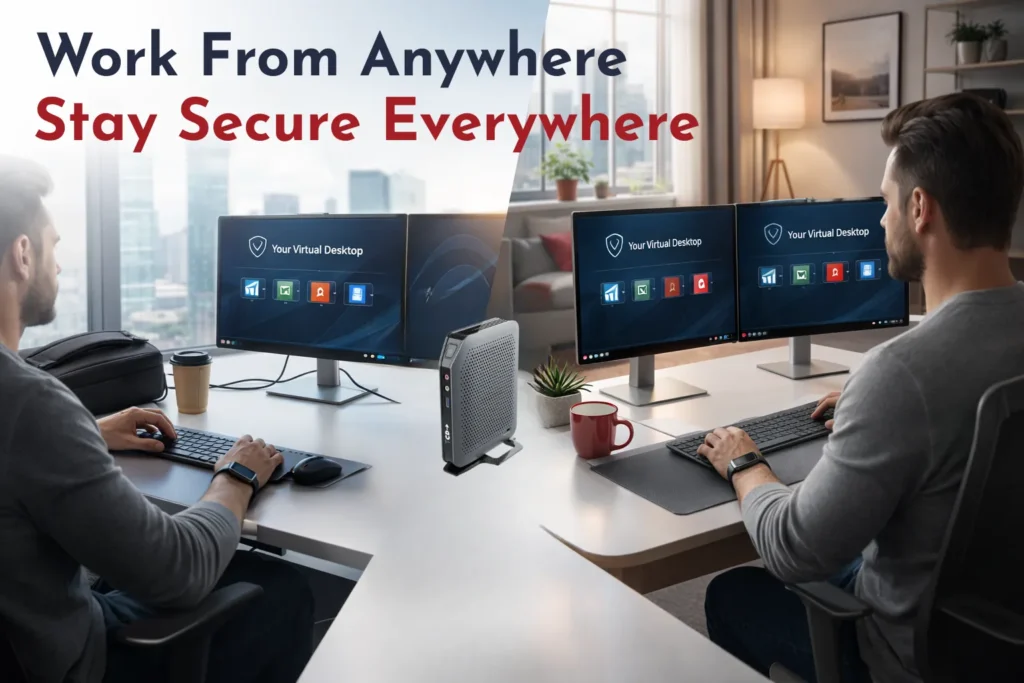
In many environments, endpoints have become a major source of inefficiency. Traditional devices introduce variability, require frequent updates, and often increase support workload. As a result, organizations are reconsidering how endpoints should function in a modern workspace.
Endpoints now serve as controlled access points, reducing IT burdens and boosting consistency.
Better Visibility Is Becoming Essential
As environments proliferate, visibility becomes essential—a clear theme of Citrix UNITE 2026. IT needs real-time visibility across sessions, networks, and infrastructure. Without it, troubleshooting is reactive and inefficient.
Citrix is boosting platform observability, enabling teams to:
- Detect performance issues before users report them
- Identify whether problems originate from the endpoint, network, or backend
- Resolve issues faster with clearer insights
Proactive operations are essential for a consistent, scalable user experience.
AI Is Being Applied Where It Actually Helps
AI was addressed practically at this major event. Citrix applies AI to IT operations to reduce manual effort, improve decision-making, and streamline troubleshooting.
AI analyzes patterns, predicts issues, and helps with remediation. It’s about better IT tools, not a replacement.
Endpoint Strategy Is Becoming a Critical Layer
Citrix UNITE 2026 made clear: endpoints matter.
As computing becomes more centralized and security shifts into the workspace layer, endpoints are expected to be simple, secure, and consistent. The variability of traditional devices introduces unnecessary risk and complexity.
This is why many organizations are moving toward:
- Thin clients
- Repurposed PCs
- Lightweight, secure operating systems
At the same time, OS-level flexibility is becoming increasingly important. Platforms like Unicon eLux are being adopted to deliver a secure, Citrix-optimized experience without unnecessary overhead.
Effective eLux use requires a solid hardware foundation.
ThinClient Direct offers purpose-built thin clients for such environments: consistent performance, peripheral and multi-display support, and a stable, long lifecycle. This produces a reliable endpoint strategy.
Final Thoughts on Citrix UNITE 2026
Citrix UNITE 2026 did not introduce new concepts. It clarified EUC’s future direction.
Workspaces are more centralized. Security is embedded at the access layer. Hybrid infrastructure is the default model. Endpoints are simplified to reduce risk and complexity.
Success depends on aligning each layer of the environment with this model, from infrastructure to endpoints.
See What This Looks Like in Practice
To assess your environment’s alignment with Citrix UNITE 2026’s direction, test it in real-world scenarios. ThinClient Direct helps IT teams simplify endpoint strategy for Citrix, Omnissa, Microsoft AVD, and other EUC platforms.
Deploy a device in your environment, validate performance, and gauge operational impact before making a decision.
Try a TCD device free for 45 days or book a quick strategy call with an EUC specialist.
No obligation. It’s a practical way to test how well it fits within your environment.