DRAM Cost Surge Is Coming—Here's the Endpoint Strategy That Actually Lowers Spend in 2025–26
November 6, 2025
If you manage endpoint budgets in the US, you’re about to feel it. A DRAM cost surge is forming across the supply chain. AI’s build-out is no longer just about GPUs. It’s now crowding out conventional DRAM (because foundries are prioritizing HBM), pushing SSD demand upward as HDD supply stays tight, and shortening pricing cycles. TrendForce raised contract pricing expectations again heading into Q4 2025, and several suppliers have already implemented double-digit increases. TrendForce’s latest analyst pricing outlook for DRAM and NAND confirms this tightening and projects more upside pressure through late 2025.
If you’re the person responsible for refresh budgets, cost modeling, or endpoint lifecycle at scale, this directly affects your 2025–26 strategy.
What's Actually Driving the Spike
HBM crowd-out is real. In fact, Micron is confirming HBM capacity is already sold out into 2025, which tells you exactly how distorted silicon allocation is becoming at the high end. Memory fabs are prioritizing HBM for AI servers, which limits bit growth for conventional DRAM (including DDR5 used in endpoints). That constraint fuels the DRAM cost surge. Micron flagged HBM 2025 supply already sold out, underscoring the imbalance.
And it isn’t just DRAM. SSD price pressure is rising. With HDD lead times stretching and major vendors hiking prices, cloud providers are accelerating the evaluation of QLC SSDs for colder data. That shift pulls capacity toward hyperscalers and elevates enterprise SSD pricing risk for everyone else—even when client SKUs differ.
One more signal: pricing cadence is shortening. Some DRAM deals have already moved to monthly quoting cycles. That is precisely how a DRAM cost surge behaves when supply is not expanding fast enough.
The 2025→2026 Outlook in Plain English
- DRAM: high-teens or more YoY contract uplift is increasingly probable
- NAND flash: many analysts now expect +5–10% in Q4’25
- Storage vendors: public market statements reflect HDD supply strain into 2026–2028
TechRadar also warns that surging AI demand is already forcing multi-quarter HDD delays and higher enterprise storage pricing.
Bottom line: If you’re planning significant endpoint refreshes in the next 6–12 months, expect higher DRAM/SSD costs, slower quoting, and SKU churn.
Thin Clients vs Full PCs — The 2025–26 Math No CFO Will Ignore
This isn’t an architectural religion debate — this is about cost math. A traditional corporate desktop or laptop carries both cost drivers: DRAM density (8–32 GB, increasingly DDR5) and NVMe SSD capacity (256 GB–1 TB). When both components inflate simultaneously, unit CAPEX jumps disproportionately—especially at the densities IT teams actually standardize on.
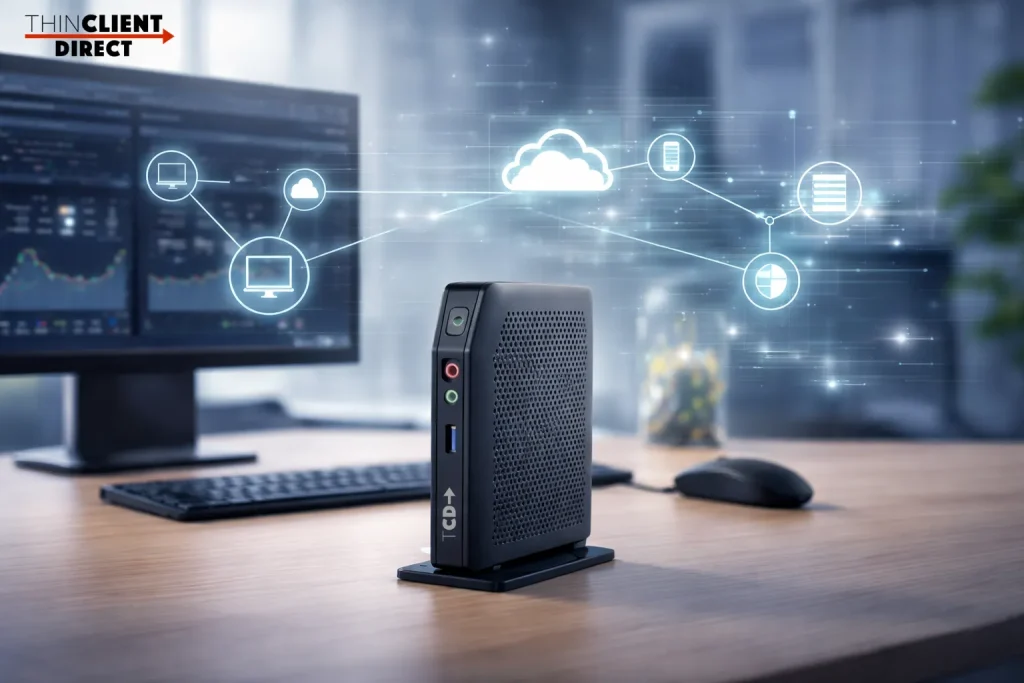
Here’s the shift: a thin client sized correctly for VDI/AVD doesn’t chase the same bill-of-materials curve. IT buyers who pivot here actually realize cost savings from thin clients because they buy less local DRAM and less local storage per seat. OPEX then shifts to where capacity scales efficiently.
This is the practical, controllable alternative to swallowing the full DRAM cost surge during a refresh cycle.
A Pragmatic Playbook For US IT Teams
1. Lock timing and structure deals intentionally: Shorter terms (quarterly reviews) help avoid getting trapped mid-cycle.
2. Optimize the spec (don’t over-spec endpoints): Standardize thin clients around modest RAM/local storage and leverage cloud desktops.
3. Run a hybrid refresh: Extend the lifespan of PCs by reimaging or repurposing them as thin-client endpoints.
4. Align with your cloud/storage team: Ask CSPs directly about QLC SSD adoption and tiering—so you aren’t over-engineering endpoint storage to compensate for backend volatility.
What Would Bring Prices Down?
Realistically, very little near-term.
Watch for:
- Materially, more HBM supply
- HDD backlog relief
- DRAM contract cadence reverting from monthly back to quarterly
- Signs that AI hyperscaler capex is flattening
(We are already seeing ripple effects in other hardware categories—new AI-capable SBCs like the NVIDIA Jetson Nano Super are being distorted in the same cost structure environment.)
How ThinClient Direct Can Help (Fast Path)
Pilot quickly: We provision thin-client pilot kits with AVD/VDI-ready images and autoscale guidance.
Right-sized catalog: We offer OS-agnostic endpoints (fanless, VESA-mountable) that keep local DRAM/flash to a minimum while meeting modern security baselines.
Adoption blueprint: A rolling 12-month Plan that blends repurpose + thin-client new seats—capturing thin-client cost savings and preventing refresh CAPEX from being dictated by a DRAM cost surge.
Want a numbers-first refresh plan that lowers hardware spend without getting crushed by the DRAM cost surge?
Talk to ThinClient Direct for a 30-minute TCO review and a tailored thin-client pilot.