7 Reasons Fanless Processors Are a Smarter Choice for Modern EUC & VDI
September 29, 2025
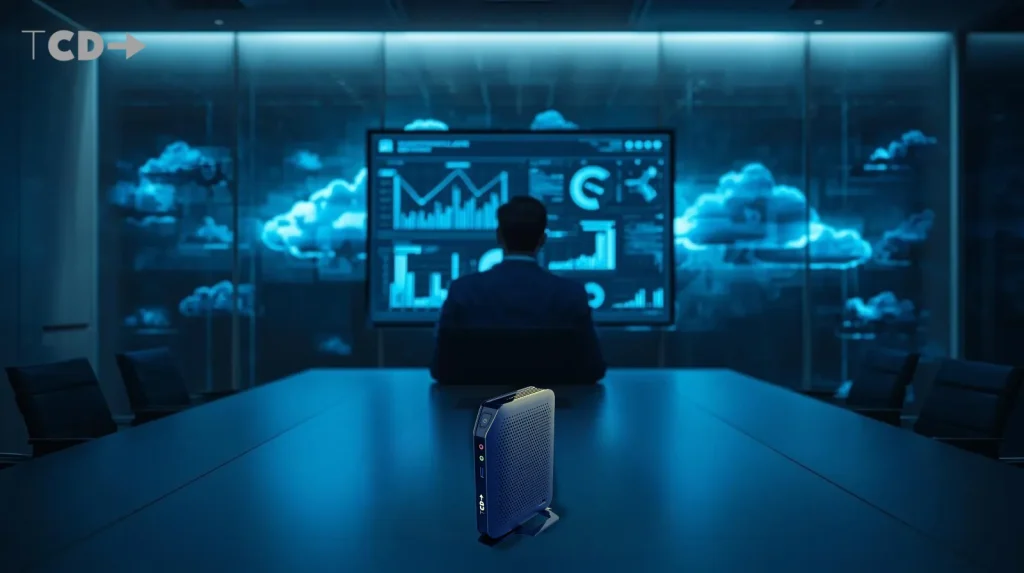
As organizations modernize End-User Computing (EUC) and migrate to Virtual Desktop Infrastructure (VDI) or Desktop-as-a-Service (DaaS), a quiet but meaningful hardware shift is underway: from traditional PCs with fans to fanless processors for EUC and VDI thin client devices.
These low-power, silent systems are reshaping endpoint strategy with better reliability, lower costs, and cleaner deployments.

1. Reliability Without Moving Parts
Cooling fans are one of the most common mechanical failure points in PCs: their bearings and motors wear out, dust reduces airflow, and failure often causes overheating at critical times.
Fanless endpoints eliminate this mechanical risk vector and reduce routine maintenance by removing the fan — like our TCD 1 Series fanless thin clients built for secure, long-life EUC deployments. Overall system reliability still depends on other factors (power supply, solder joints, storage), but eliminating a moving part is a clear durability win.
2. Cleaner, Easier to Sanitize & Maintain
Fans pull in airborne particles; studies show turbulent airflow increases particulate deposition inside electronics. In dusty or high-traffic spaces, this accelerates thermal degradation and service calls.
Sealed, wipeable enclosures align with CDC infection-control guidance to use wipeable covers and approved disinfecting procedures, which is valuable in healthcare, retail, and public-facing spaces.
For warehouses and factory floors, IP-rated sealed systems significantly reduce dust ingress and cleaning needs (see Assured Systems’ benefits of fanless industrial computers in harsh environments for more details).
3. Lower Power Use & Reduced Heat Load
Low-power chips such as Intel’s N-series (e.g., N5105, N200, N150) have processor TDPs from 6 W to 15 W. According to independent measurements by ServeTheHome, Real-world tests of N100 fanless mini-PCs show about 10.5–12 W idle and ~22–23 W peak, compared to traditional desktops that can exceed 60 W under load (idle is often higher than thin clients).
Deploying fanless processors for EUC & VDI helps IT teams hit sustainability and cost-reduction targets.
4. Silent Workspaces, Better User Experience
A fleet of fanned desktops creates a constant background hum in call centers, nursing stations, and trading floors.
Fanless endpoints run completely silent, improving focus and comfort while projecting a cleaner, more professional front-office impression.
5. Longer Practical Lifecycle & Lower TCO
Many embedded/fanless platforms are sold with long product availability (up to ~10 years) and avoid the service calls associated with fan failures or filter cleaning.
While real-world fleet MTBF data varies, eliminating fans reduces maintenance and can extend refresh cycles compared to typical 3–5-year PC refresh norms. Organizations using fanless processors for EUC & VDI often report longer refresh cycles and fewer field repairs.
If you’re planning around Microsoft’s upcoming changes, see our guide: Windows 10 End of Life — What it Means and What Are Your Options to decide whether repurposing or replacing devices makes more sense.
Combined with lower energy use, this contributes to a lower total cost of ownership (TCO) — especially in large deployments.
6. Compact, Secure & Easy to Deploy (When Management Tools Support It)
Without fans and airflow channels, devices can be ultra-compact — mountable behind monitors, under desks, or inside kiosks.
Most models include TPM chips and support locked-down OS builds for security.
“Zero-touch” deployment isn’t unique to fanless hardware — it depends on your OS and MDM/EMM stack (e.g., Windows Autopilot, Intune, or Linux thin client management suites) — but these devices are generally compatible with those provisioning systems.
7. Purpose-Built for Modern VDI & Cloud Desktops
VDI and DaaS push the heavy compute to the data center; the endpoint’s main job is efficiently decoding and displaying the session.
Modern low-power CPUs include hardware H.264/H.265 and, increasingly, AV1 decode to keep remote desktops smooth while conserving CPU cycles.
Intel’s N100 iGPU supports up to three displays (board dependent), enough for many trading desks or call-center operators.
When paired with a supported OS/client, these endpoints can run Citrix Workspace (HDX), Microsoft Remote Desktop for AVD, and VMware/Omnissa Horizon — as long as codec/GPU requirements are met. Explore key VDI and DaaS endpoint trends 2025 and how to avoid common pitfalls.
Where Fanless Endpoints Shine
- Healthcare: Quiet, easy-to-sanitize nurse stations and patient kiosks.
- Retail: Reliable POS and back-office dashboards without dust issues.
- Warehouses & logistics: Rugged, dust-resistant shared workstations.
- Call centers & trading floors: Dense, silent deployments with lower heat.
- Education: Simple, low-maintenance labs and classrooms.
Executive Takeaway
Fanless processors and endpoints are not about cutting performance — they’re about strategic efficiency:
- More reliable hardware (fewer moving parts to fail)
- Lower power and cooling costs at scale
- Longer refresh cycles and reduced maintenance
- Compact, secure, silent devices ready for VDI/DaaS
For CIOs and IT leaders driving EUC modernization, the silent, fanless endpoint is an innovative lever for cost control, risk reduction, and user satisfaction.
Request a free 45-day TCD Thin Client device trial to explore how fanless performance could fit into your EUC strategy — and experience the benefits before you commit.